



Good, I’ve got your attention before GTA VI comes out.
Once it does, you’ll just copy FPL Harry’s moves, as your FPL attention span shrinks to those five minutes you have while eating pizza between missions.
I get it. Life’s meant to be fun.
After all, this newsletter is meant to be fun too. While thinking about this week’s topic, I decided to write about the team closest to my heart. Don’t judge me – I’ve never been one for the safe or conventional route, and I wouldn’t have it any other way.
Anyway, Spurs.
I’ve been talking about them a lot this season because two topics are particularly trendy in FPL: their defence and Jan Paul van Hecke (£5.1m). Today, though, the spotlight will be elsewhere…
Mateus Fernandes’ (£5.6m) and Sandro Tonali’s (£5.3m) arrivals were among the most-discussed topics of the pre-season.
Naturally, I published a deep dive.
Reading it again after those 4 months, it sounds like I’m a time-traveller. If you have time – I know, I know, GTA VI – give it a read:

While I was realistic about Spurs’ chances this season, it was easy to get excited about Fernandes. Sadly, he started the campaign half-injured, and then Roberto De Zerbi was stubborn about his role on the pitch.
Up until Gameweek 7, Fernandes played as #10, and you know I wasn’t happy about that, because I always believed that pairing him with Tonali in the double pivot would allow him to show his full skill set, improve the team, and accelerate his development and adaptation process.
The young Portuguese can do a lot of things at a high level, and it simply doesn’t feel right to play him that advanced. To remind you, he played for the West Ham team that:
had the lowest possession % in the Premier League last season
played the lowest defensive line and were among the teams with the fewest passes per sequence
looked to counter rather than build up slowly
Basically the total opposite of the current Spurs.
💡 In those less-than-favourable conditions, Fernandes ranked in the 86th percentile for his share of the team’s progression, and above the 70th percentile for advanced data metrics that assess how his runs and passes move the ball into dangerous positions and, ultimately, increase scoring chances while reducing the risk of conceding.
He has a nice passing range from deeper areas, so put him there and play someone who will crash the box as a ten instead.
Please.
However, I don’t agree with fans whining that he was poor at number ten. He wasn’t. He’s just not a flashy player. His dribbling didn’t get anyone off their seats. He fouled a lot. He took many shots, but they were ugly attempts outside the box or from wide angles.
Is this the £85 million player?
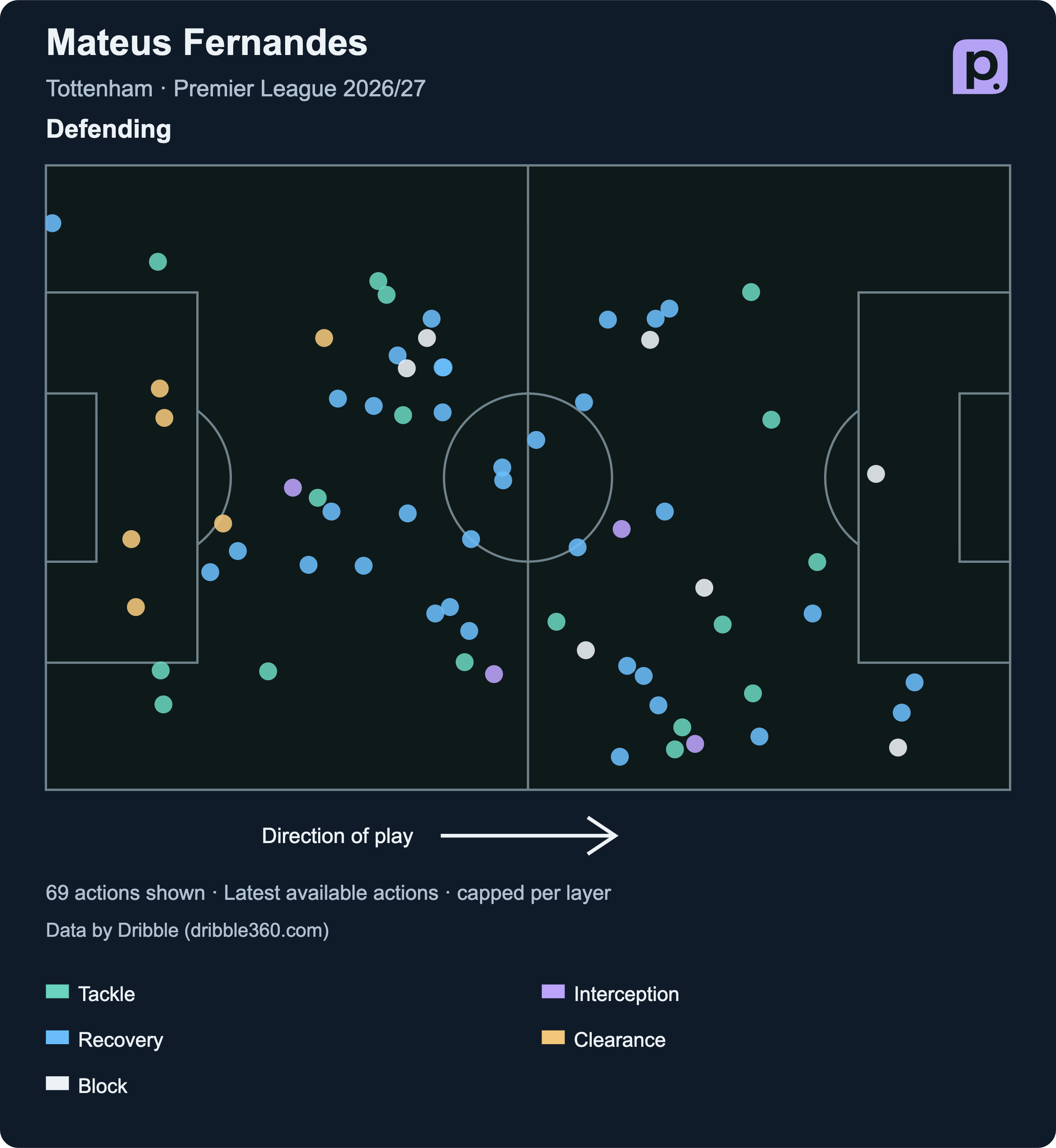
Well, yes. Right from the start, he proved he’s a reliable tackler, winning so many balls in situations that matter, either by stopping dangerous actions before they fully develop or by winning balls in important areas when they’re happening.
Look at the sea of recoveries in those central areas on a new PlayerPrint:
In the build-up, his passes and runs made sense and provided value.
Advanced data clearly show all that. And even though he has zero assists so far, his final pass and xA numbers look pretty nice, especially considering Spurs’ attack ranks 14th for non-penalty xG and 19th for xG per shot, struggling to create dangerous shots without Sávio on the pitch.
He’s not like Mohamed Kudus, who looks superb all the time because he does 1v1s. I famously once said he’s good for dribblecons on X. I will issue a bit of an apology later in this article. Hold that thought.
Back to Fernandes.
In Gameweek 7, he finally moved into his natural position(s). It’s a tiny sample of 3 games, and one was the Crystal Palace clash, tainted by Mateta’s 13th-minute red card, so I can’t draw any conclusions.
Let’s just say the other two games were against Leeds and Chelsea, with Caicedo and Lavia (alright, another red card, but in the 80th minute…), so they weren’t easy matchups. Fernandes didn’t offer much going forward, but he absolutely nullified their attacks when he had to. Super, super solid. So, let’s see.
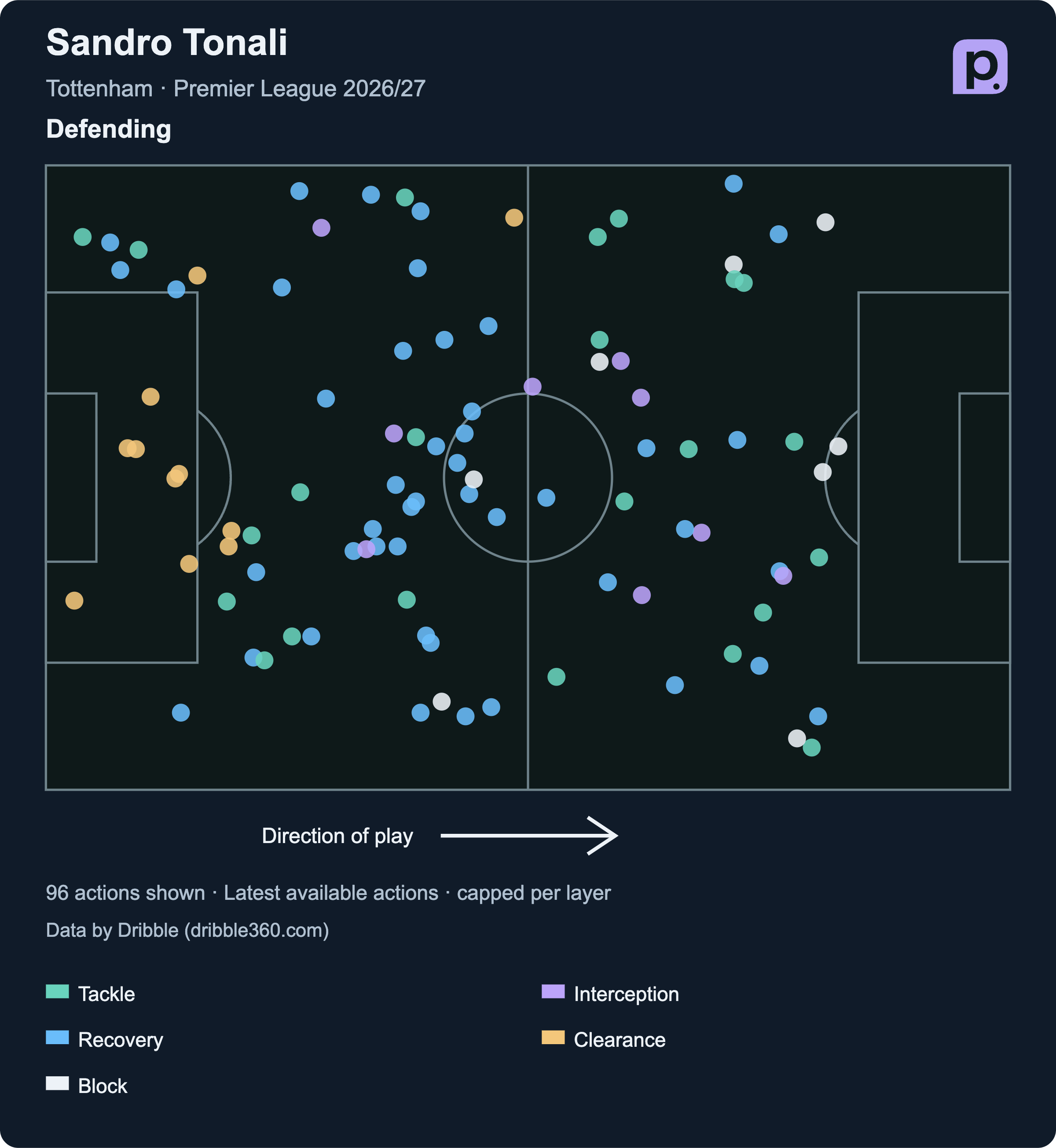
We now have close to 1,000 minutes on Sandro Tonali, and I’ll just repeat what I said during the pre-season: Tonali runs, covers a lot of ground, presses like a madman, and wins duels. Those were the exact words, and it’s exactly what he does this season. He also controls the tempo in the build-up.
Look at his engine (those two maps are a nice visualisation of how they complement each other with Fernandes):
Tonali does many things at a solid level, but it’s hard to point to anything truly elite. That isn’t necessarily a bad thing if you can overlook the £100 million investment.
I like both his defending – tackling, reading the game, winning balls deep – and what he does on the ball, in both the build-up and the final third.
I’m convinced both he and Fernandes have a major influence on the defensive quality Spurs have shown recently. They allow Jan Paul van Hecke and Micky van de Ven to be adventurous.
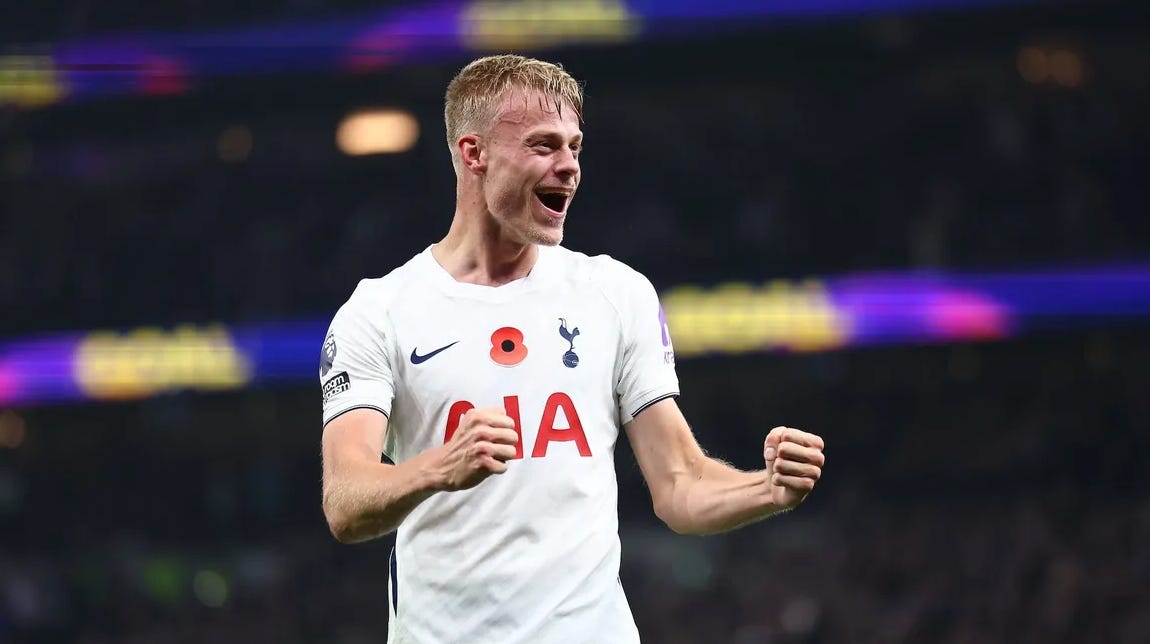
Before Gameweek 10, I delved deeply into the JPVH topic because what he does in possession is fascinating. Studying him through the lenses of event and tracking data clubs use is immense fun, and truly shows how exceptional he is, but public platforms often offer excellent insight too.
Did you know Van Hecke has the most carries, the highest carrying distance, and the most progressive carries in the league, according to OPTA data? He has already made 180 carries that move the ball at least 5 metres upfield.
Do you know how many of those the second-most-active player has?
148.
Some say the Vuškovič-for-Van Hecke swap will be one of the worst transfer deals in football history. Listen, I’d like to have Vuškovič in the team. I’d really do. But that’s too much of a simplification. Sadly, that’s outside this article’s scope.
Historically, I’m Mohamed Kudus’ (£6.6m) biggest hater, but I can work with new information. And this season’s version of him is probably the best we’ve ever seen in the Premier League. Yes, it’s still below 600 minutes, but he gets the job done when on the pitch. Unfortunately, only from a broader footballing point of view.
He’s not an FPL pick for me, even though the timing to write this isn’t ideal: Spurs play Ipswich, Sunderland, and Hull in the next five GWs, so he could rack up a few returns if he’s running hot. However, I think this will be rather short-lived, and at Christmas there’s a better use for free transfers than buying him and selling him soon after.
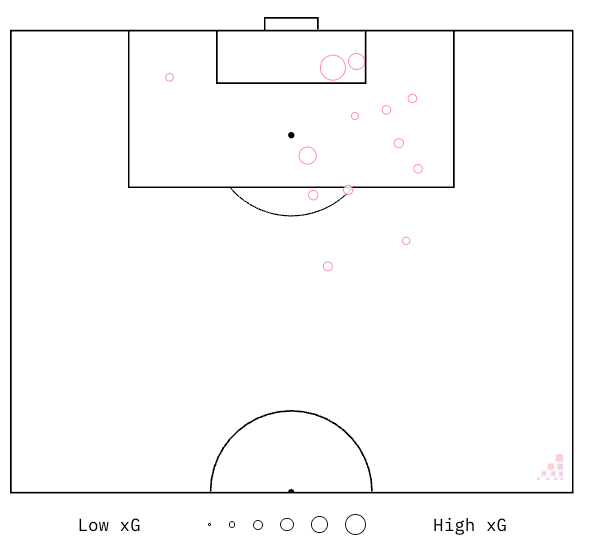
Creatively, he looks rather average when it comes to decision-making in the final third. The good thing is that he takes corners from the right side, though I’m not sure his open-play production is sustainable.
His 2.20 non-penalty shots and 0.21 non-penalty xG don’t look too bad at first glance, but it’s a classic example of why you must put expected numbers in proper context when working with low sample sizes.
Those numbers are driven solely by volume, not quality. Of his 13 shots, 9 are inside the box, but the distribution is horrific.
9 missed shots
2 blocked
2 saved
0.01 xGOT per 90. Ouch. He’s on 0.13 xG per shot, which is fine, but much of it comes from that terrible 6-yard box miss after Luca Williams-Barnett’s solo. I don’t fully trust him in FPL historically, but I’ll be happy to be proved wrong.
So, Jan Paul van Hecke. Everyone else is in the “monitor for now” category. Let’s see what happens once Sávio is back.
As I said in July, if you build a wall, you still need a roof. Walls are nice, but it still rains inside.
What to read next?


Join the Data Dribble premium community.
This newsletter is 100% reader-supported. There’s free content every week, but becoming premium unlocks the full edge:
2 deep dives per week
Weekly Q&A
Discord community
Prize mini-league, pre-season content, Subscribers’ chat and other perks
… for the price of one pint. 🍺
Hi Filip
What’s GTA VI? A new football system I haven’t heard about? 😉