



Alright, reader.
Last season, I published this type of article in Gameweek 10, so with about double the data we have now:

To remind you, a 9- to 10-week sample is historically sufficient to tell whether some macro trends will persist for the rest of the season. After Gameweek 5, it still won’t be enough to draw definitive conclusions.
But we can observe what’s happening, recognise why, and make some educated guesses.
By publishing this article, I will probably either scare you or give you some hope, but we will know the real state of things fairly soon (mid-November). As I write this paragraph, I don’t know how bad it is.
If you read this, there’s probably at least a slight spoiler in the title, since I always write it last.
Exciting.
Let’s get into it.
🌶️ What’s on today’s menu?
Was last season’s Premier League just a complete outlier?
Are there more goals and higher-quality chances?
Is the 3rd FWD spot pretty much alive?
Brentford showed them a light…
Why are Chelsea defenders getting so many DEFCONs?
Why are the most-scoring defenders getting their points right now?
Set pieces and aerial duels – has anything changed, and what does it mean?
And MUCH more!
Who Got The Assist best season review out there?
Before I start the analysis, I’d like to give a shout-out to Tom from Who Got The Assist Podcast. Several months ago, he released one of the best articles I read last season.
I recommend you check it out.
It was the season’s review, which included several interesting DEFCON data points. It may also have offered some hope for the current season – it confirmed my lingering suspicion that last campaign could have been a complete outlier.
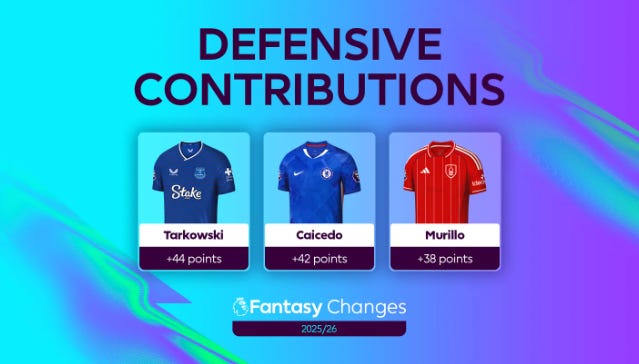
I don’t want to cannibalise Tom’s piece by listing the data, so just briefly: the previous campaign was notable because FPL DEFs scored 2,829 points more than in 24/25, a 30.72% year-on-year rise.
Your first thought is that DEFCON killed the game.
But not so fast.
Defenders hit the DEFCON threshold 822 times, which is 1,644 extra points. But what about the remaining 1,185 points? Simply put, those points came from clean sheets, set pieces, long throws, and all the trends we were mapping on Data Dribble last season.
Well, here we go again.
A Brighton Brighter future upon us?
Depending on how big your PTSD from last season is, you might or might not recall that we started it with a never-ending stream of hauling defenders. It was borderline absurd.
There were clean sheets, goals, assists, DEFCONs, a full bonus, all of it. And MIDs were abysmal, lacking the final product you’d expect.
After Gameweek 5 last season, the distribution of the top 20 highest-scoring players in the FPL was as follows:
9x DEFs
5x MIDs (and one of them was Moisés Caicedo, so…)
4x FWD
2x GK
That’s essentially 12 defensive players in the top twenty.
This year, things are looking more normal:
10x MID
Pascal Groß
Kevin Schade
Rayan Cherki
Antoine Semenyo
Cody Gakpo
Bukayo Saka
Mohamed Belloumi
Bruno Fernandes
Marcus Tavernier
Alex Scott
7x DEF:
James Tarkowski
Jayden Bogle
Maxim De Cuyper (playing out of position in all 5 games, so it’s effectively 6 DEFs)
Joško Gvardiol
Luka Vuškovič
Lewis Hall
Marc Guéhi
3x FWD:
🤖
Alexander Isak
João Pedro
2x GK:
Konstantinos Tzolakis
David Raya
If you noticed the numbers don’t quite add up, you’re right: David Raya, Marc Guéhi, and Alex Scott are tied for 20th place.
Maxim De Cuyper played the whole season as a winger, and the list includes ten other midfielders, along with three forwards you’d expect to perform well: Erling Haaland, Alexander Isak, and João Pedro.
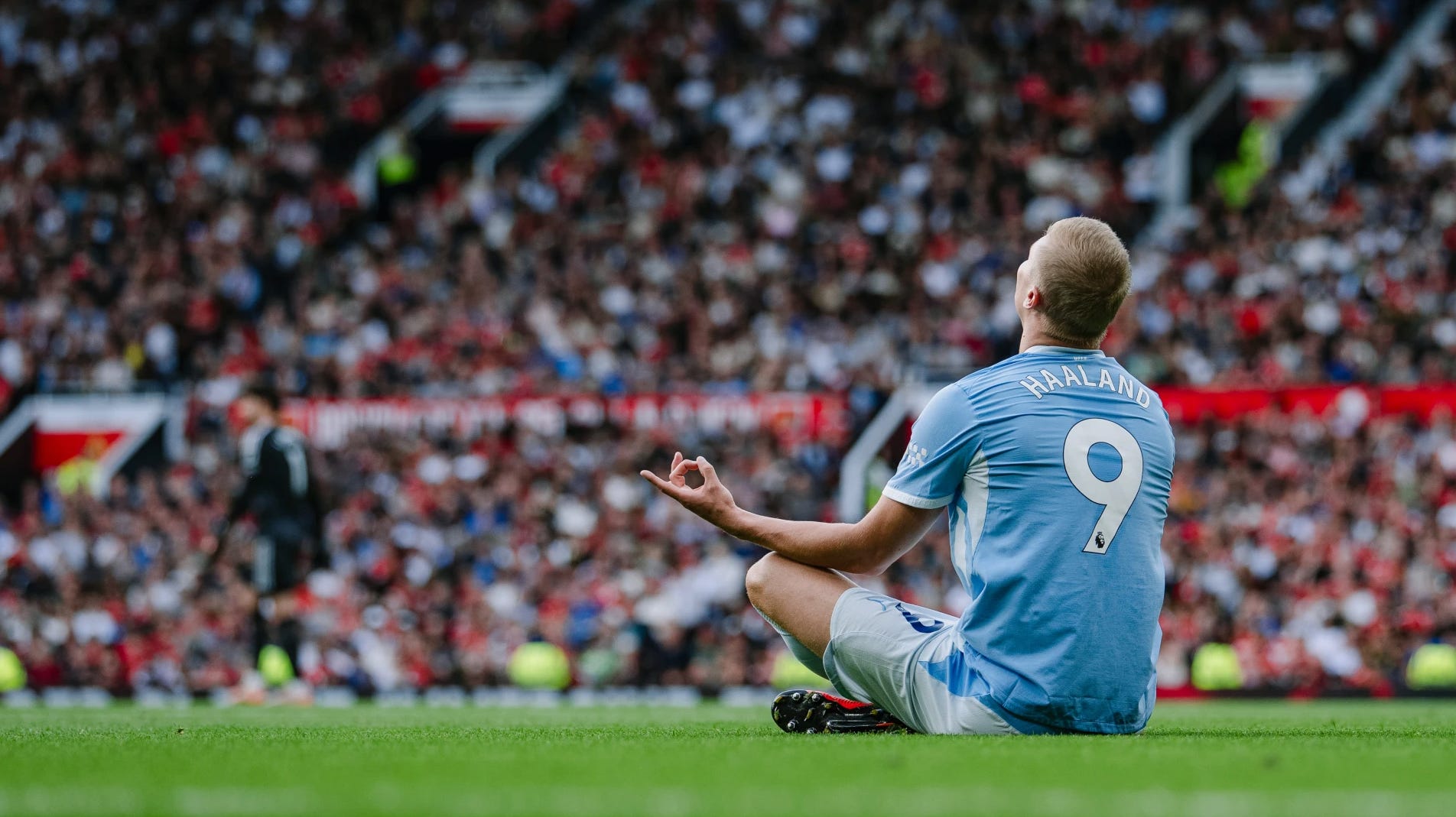
Let’s look at how those defenders earned their points. We don’t need to discuss De Cuyper:
James Tarkowski (£6.1m): Each morning, the sun comes up. Sometimes you don’t see it, but it’s always there, behind the clouds.
James Tarkowski is like this DEFCON-producing sun. The clouds are the structure that didn’t let you pick him, since he costs £6.1 million, um.
The Englishman is on 10.2 defensive contributions per 90, which means 14 players with at least four stars average more, but the distribution shows how reliable he is:
He hit the threshold 60% of the time
One time, he racked up a frustrating 9 defensive contributions
The other time, he was on 8
On top of that, Everton kept three clean sheets. Some of them were rather lucky, but let’s give some credit to Jordan Pickford’s shot-stopping.
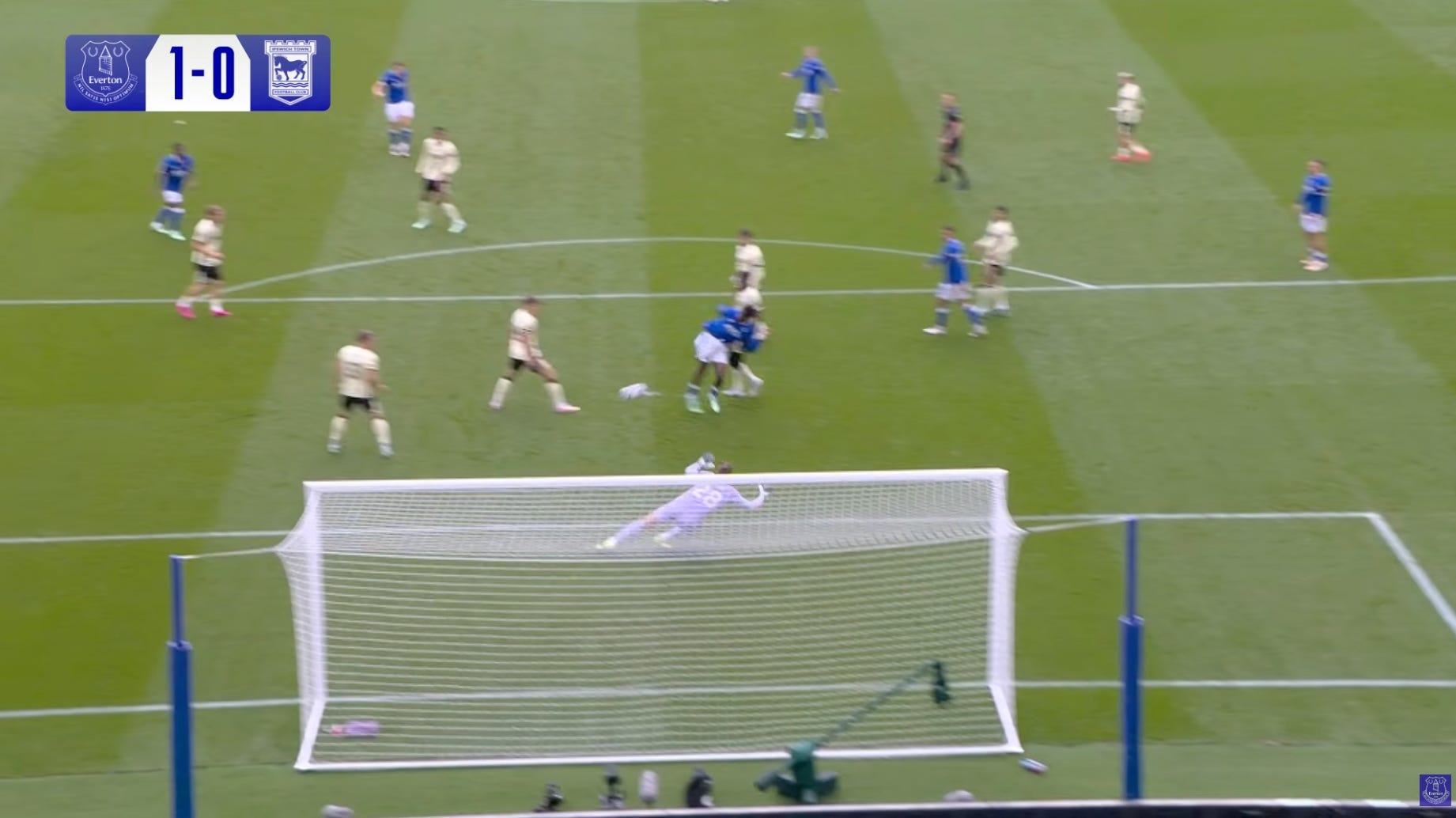
Tarkowski also scored a goal from a set-piece, picking up a super-random second ball after Bournemouth’s defensive error. This season, he’s not even the most frequent set-piece target.
Then there’s an assist for Thierno Barry’s goal last gameweek. You be the judge of how repeatable this is.

However, with his historical floor, it’s okay to position yourself to get lucky.
I’m just demonstrating how volatile things can be at this phase of the season. Anyway, he has the potential to remain among the highest-scoring defenders for the rest of the season just because of the type of player he is.
Jayden Bogle (£4.6m): 3.90 DEFCONs p90, but who cares – he scored two goals. One was a fuggazi goal by Calvert-Lewin, but it was too late for the game to update when this decision was made.
Joško Gvardiol (£5.7m): 6.40 DEFCONs p90, but who cares #2 – one goal, 3 assists, 2 clean sheets. It adds up over five games. That production will slow down. That’s like 99,99999% certain.
However, he can definitely become one of the highest-scoring DEFs out there, simply because he’s one of the most nailed City players and can produce some final output quite regularly.
Luka Vuškovič (£5.0m): He’s a genuine aerial threat and the most frequent recipient of Brighton corners. On top of that, he averages 8.84 DEFCONs p90 (4, 8, 10, 9, 12). That screams pretty sustainable.
Lewis Hall (£5.3m): Well, well, well, look at that.
9.22 DEFCONs p90
60% hit rate
the most frequent set-piece taker
involved in corner routines
open-play creativity
Do we finally get our full-back unicorn, who will challenge the centre-back beasts who rack up DEFCONs and pose an aerial threat?
We’ll find out pretty soon.
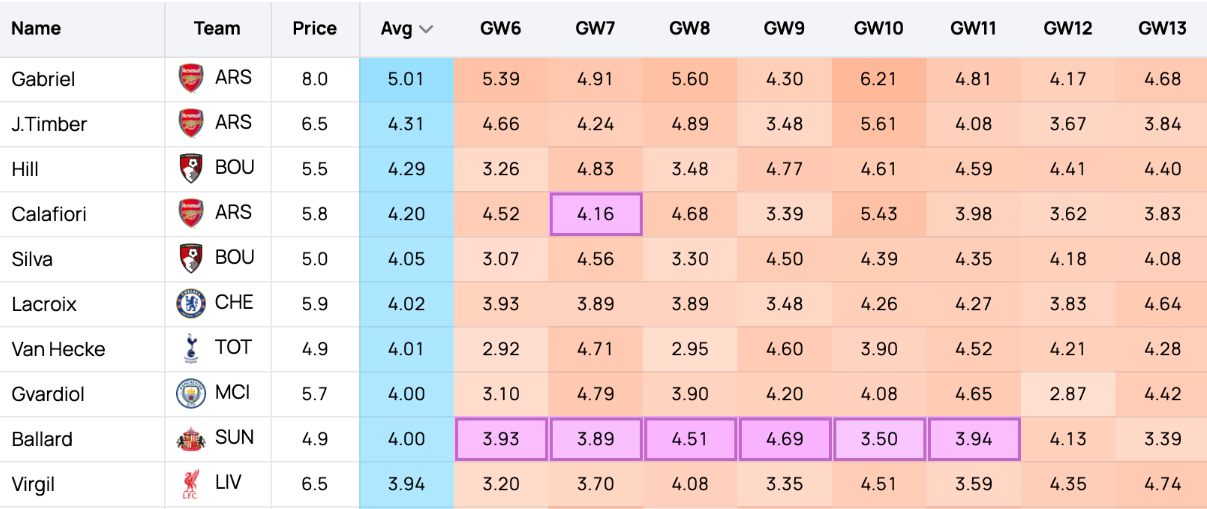
By the way, these are Solio Analytics’ top 10 defenders, ranked by predicted points for the upcoming 8 Gameweeks:
All right, I think that’s enough. We’ve just seen that defenders’ returns are still noisy.
It all makes sense: in those short bursts of games, someone always has a run of attacking returns/clean sheets, but it can’t continue at the same rate over 38 gameweeks. In the long term, those players’ outputs will regress towards the mean, and those DEFs who tick along will join the party.
💡 This was just a bit of a warm-up to build awareness of how the current landscape looks and that it’s still pretty noisy when we discuss most of the things.
The period between Gameweek 6 and Gameweek 12 will be a fun one, as the noise will become a signal, and that’s when we’re gaining an edge.
However, by analysing what’s happening right now at a macro level, we’re gaining a head start and can react quicker. And that’s a big part of FPL – be earlier than everyone else.
Do teams still engage in aerial duels?
One key finding from my last season’s article, based on a substantial sample of seasons, is that early-season trends in aerial duels tend to persist for the rest of the season.
Although it might seem counterintuitive, when it comes to the overall volume of contested aerial duels, about 20-25% of the season, which is GW8/9, is sufficient to tell what the rest of the season will look like. Tactical adjustments take time, so the trajectory rarely bends.
As you probably know, a large share of defenders’ DEFCONs are clearances (“C” in CBITs), including headed ones, so last season’s year-over-year 30%+ increase in aerial duels was a big deal.