


If a player analysis is combined with the right match-up context, it can still give you a significant edge in FPL that no solver can (yet?) replicate.
At the same time, it doesn’t automatically mean everything will pan out exactly as predicted.
This is simply because a single game of football involves an absurd amount of luck, a fact you must accept*. But by doing this two-layered analysis™, you’re increasing your chances of long-term success.
*That’s why traditional metrics like shots, goals, and pass accuracy (lol) don’t suffice. Data scientists developed tools such as expected goals, VAEP, xThreat, chain metrics, and others that help evaluate players’ and teams’ performances with much greater precision, objectivity, and predictive value.
And it works.
Matthew Benham did it again with Brentford this season, even after that summer exodus.
Heart of Midlothian nearly won the Scottish Premiership this season after embracing the analytics revolution.
It has happened several times historically, and I saw some of these firsthand.
I’m mainly focusing on match-up analysis across three cases on Data Dribble:
Free Hit guides
Differentials for the run-in
Weekly non-transfer decisions during a regular season – who to bench and who to play, bench order, or captaincy (less so, being pretty conservative with that)
💡 When everything clicks, it’s almost as if you’ve just predicted the future.
Best told in pictures.
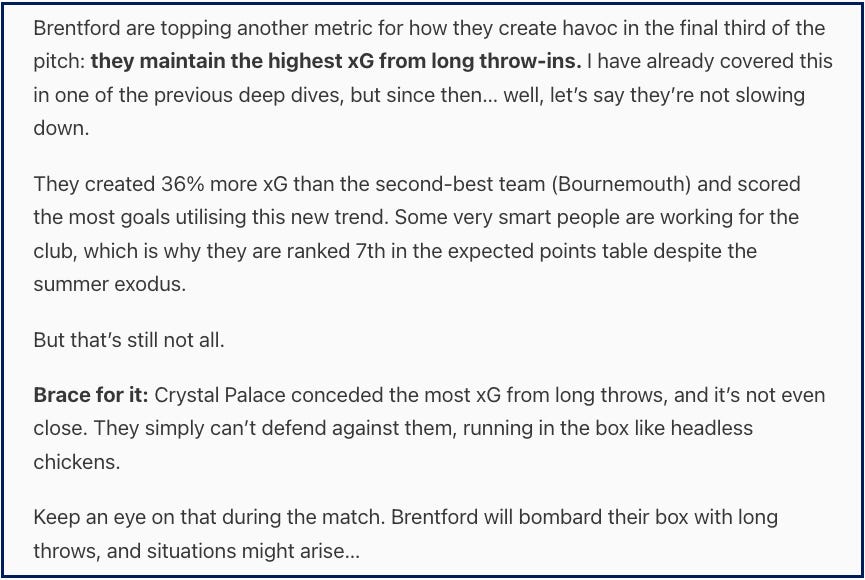
Brentford, long throws, and Dango’s haul
There are often positional and stylistic advantages, or even some very specific stuff:
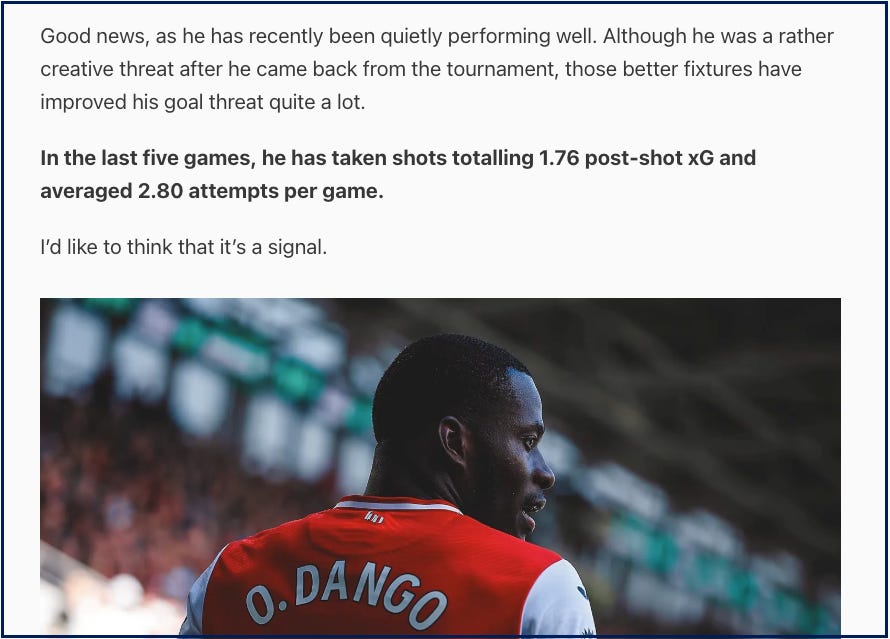
At the same time, there are players who are about to blow up.
Think of it as buying undervalued stocks:
It was a clash between the team that mastered the new Premier League trend and the one that struggled to adapt to it.
Long throws always start with Michael Kayode…
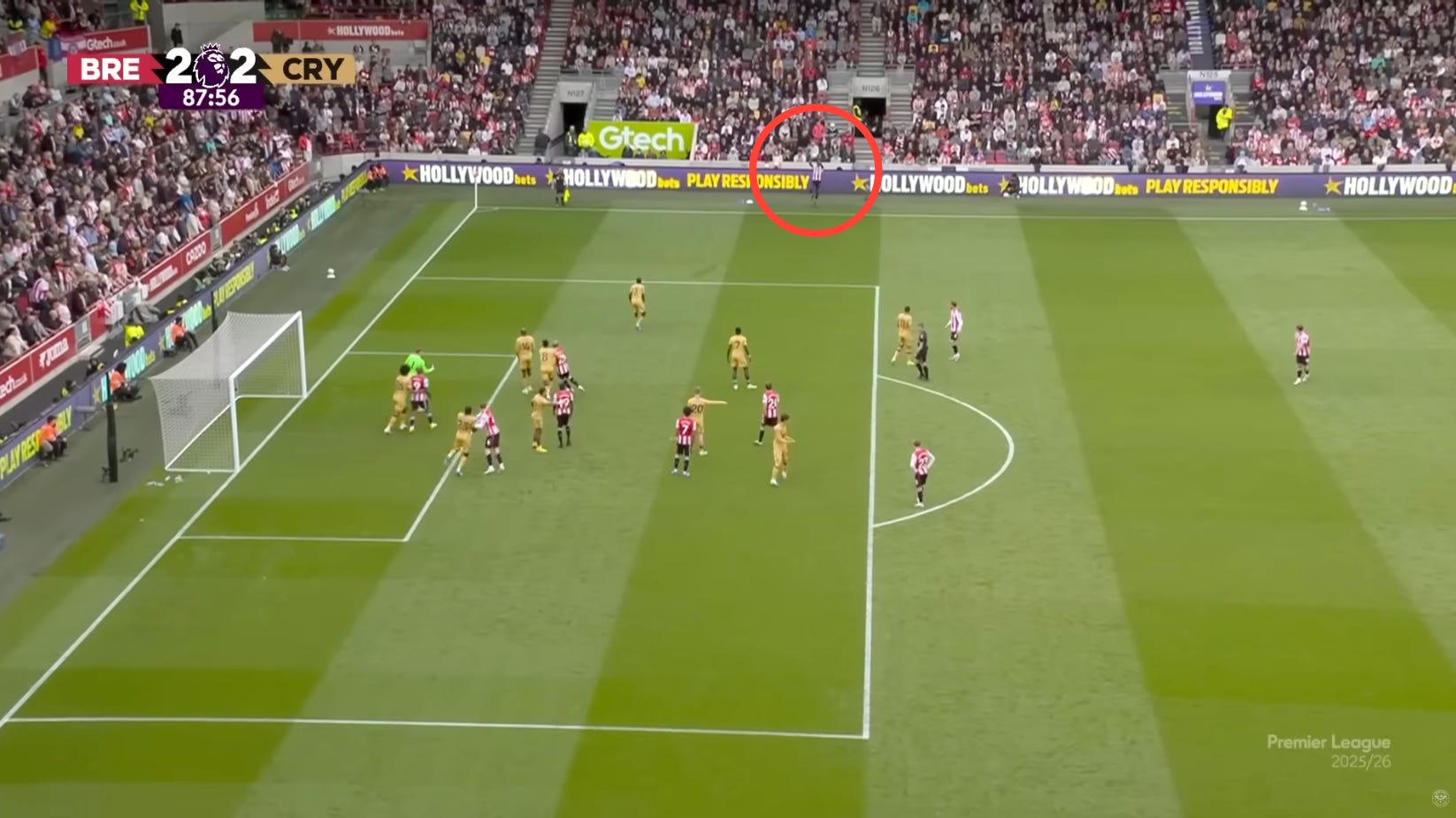
The Palace often allowed this chaos inside the box:

… and Dango Ouattara has a knack for picking the right spots close to goal:
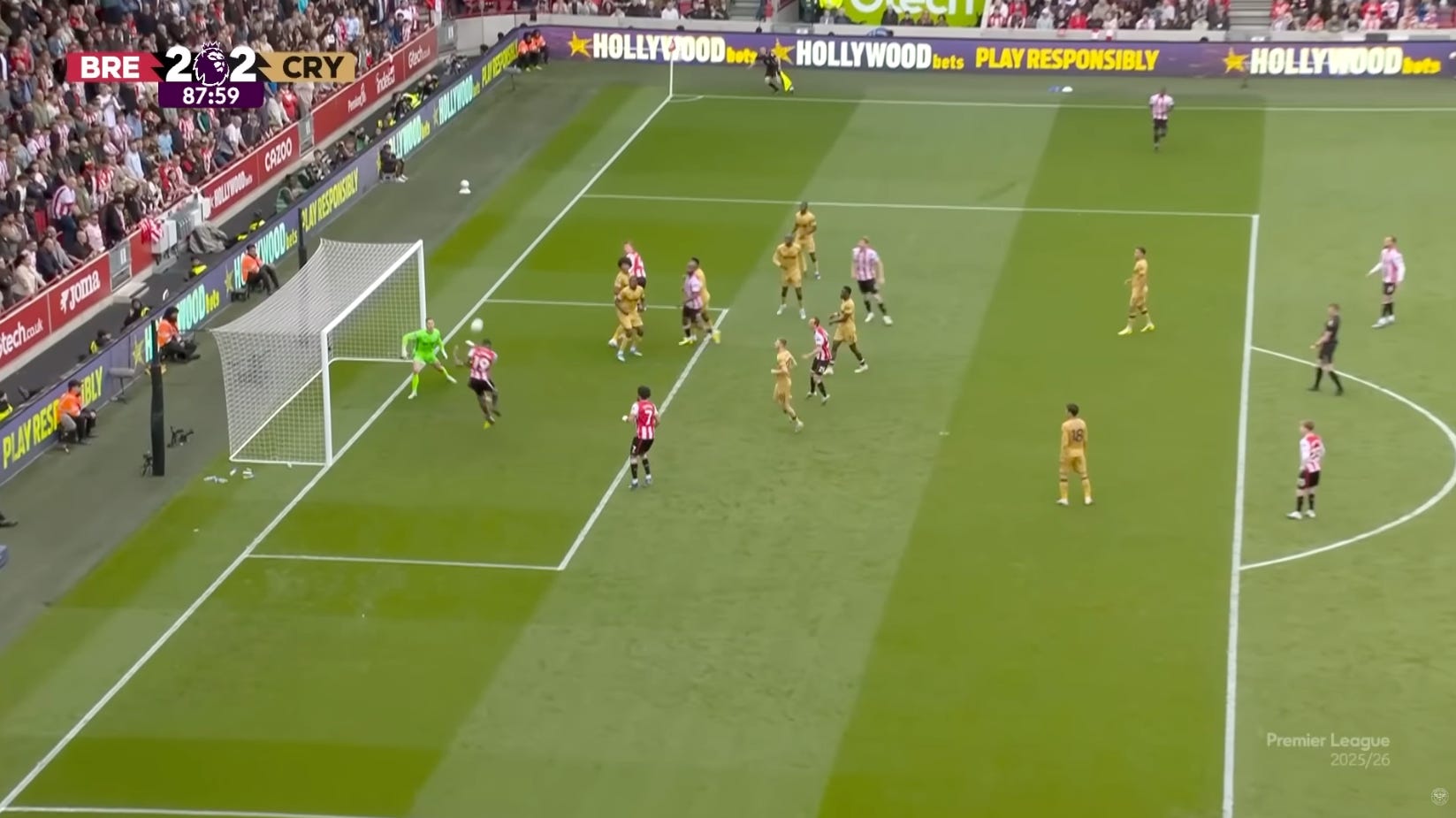
Second goal for Dango in that game.
2% effective ownership.
Honestly, I covered differentials in such detail last week because the pool of viable picks felt much stronger in GW37 than in GW38. Let’s see what’s changed since then and whether any edges have opened up.
💡 Oftentimes, boring stuff works.
All you need to do is repeat the same process and frameworks for every single GW to get good results. It works the same way in fitness, in business, and in FPL.
If you don’t need a differential, don’t force it – you might be in a perfect spot to just pick the best player you identify, without looking at EO. I’ll still try to make that article enjoyable for you and throw in some interesting stuff, but always do what you need to do.
People are selling Brighton players. Why?
A few months ago, Brighton players in this fixture wouldn’t have excited me much.
But the Premier League is a dynamic, ever-shifting beast, and things look very different now.
Brighton were a source of heartbreak for many of us last week after conceding in the final minutes of the Leeds game and failing to score a single goal despite having the game under control.
The Whites won 1:0, but it was a poor overall performance, with many chances conceded and only one good shot created (after Van Hecke’s terrible mistake) – Brighton racked up 3.06 expected goals, compared with Leeds’ meagre 0.39.
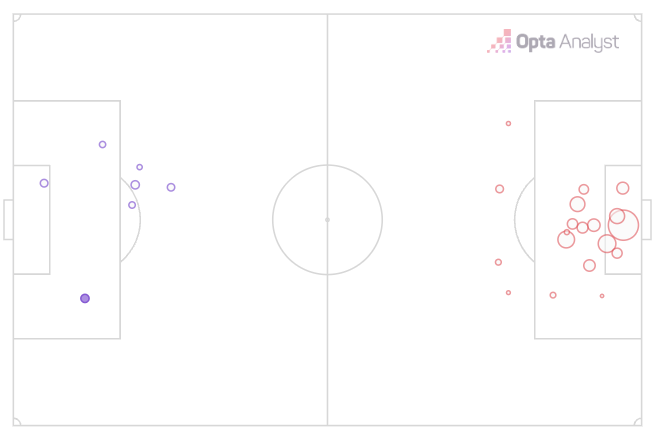
It was just another proof that Brighton have had a fantastic second half of the season and that they deserve to be in the running for European places.
Let’s see some data from the last 10 games:
2nd for xG created
2nd for xG conceded
2nd for expected points
4th for actual points
And we can go deeper than that.
❗ In those last 10 games, Brighton’s biggest share of threat comes from sustained build-up play and slow positional attacks. They scored 11 goals from them, the most in the league during that period.
They launch very few counter-attacks, which is a good thing, as Manchester United are great at defending those.
However, they are certainly vulnerable when pinned down in their defensive third. And while they ranked among the best Premier League defences at one point, they're not that great nowadays…
In that late-February+ sample, only Everton, Forest, Wolves, Newcastle and Burnley conceded a higher volume of dangerous shots.
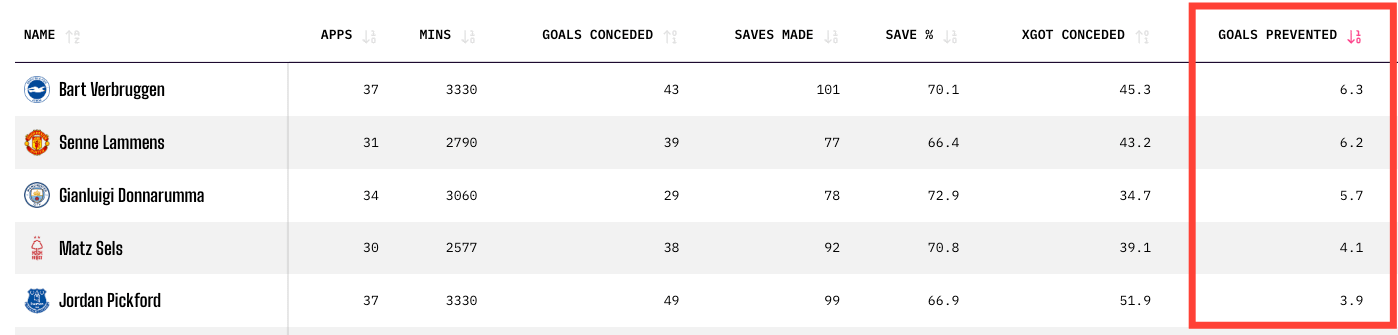
Having Senne Lammens (£5.1m) is proving pretty handy. There’s every chance United will allow Brighton several good shots. It’s a trend now.
This week, Ted Knutson published an article examining why “on the beach” teams keep getting results despite having nothing to play for.
One possible explanation he offers is that there are still financial incentives for finishing higher in the league table – the higher the position, the bigger the bonus money for players and coaches. While that may be true for some, it seems United try to win those games simply by attacking more than defending. That’s exactly what beached teams are known for.
So, if you’re arriving in Gameweek 38 as a GW32 wildcarder loaded with Brighton players, it’s not the end of the world, especially when you own Jack Hinshelwood (£5.2m), Pascal Gross (£5.6m), or Danny Welbeck (£6.4m).
As for Jan Paul Van Hecke (£4.7m), that’s team-dependent, but United are quite susceptible to set pieces, and meeting a DEFCON threshold is certainly within the realm of possibility.