
Welcome back, reader!
As the title suggests, it’s the week when many of us will try to get difficult benching decisions right.
Anything can happen in a single game of football, so benching some returns during the season is inevitable, even if you made a well-informed decision.
But don’t worry. Playing well will earn you points over the long term.
So I’ll use advanced data and detailed match-up analysis to see whether there are clear signals to make those decisions easier this week. 💡
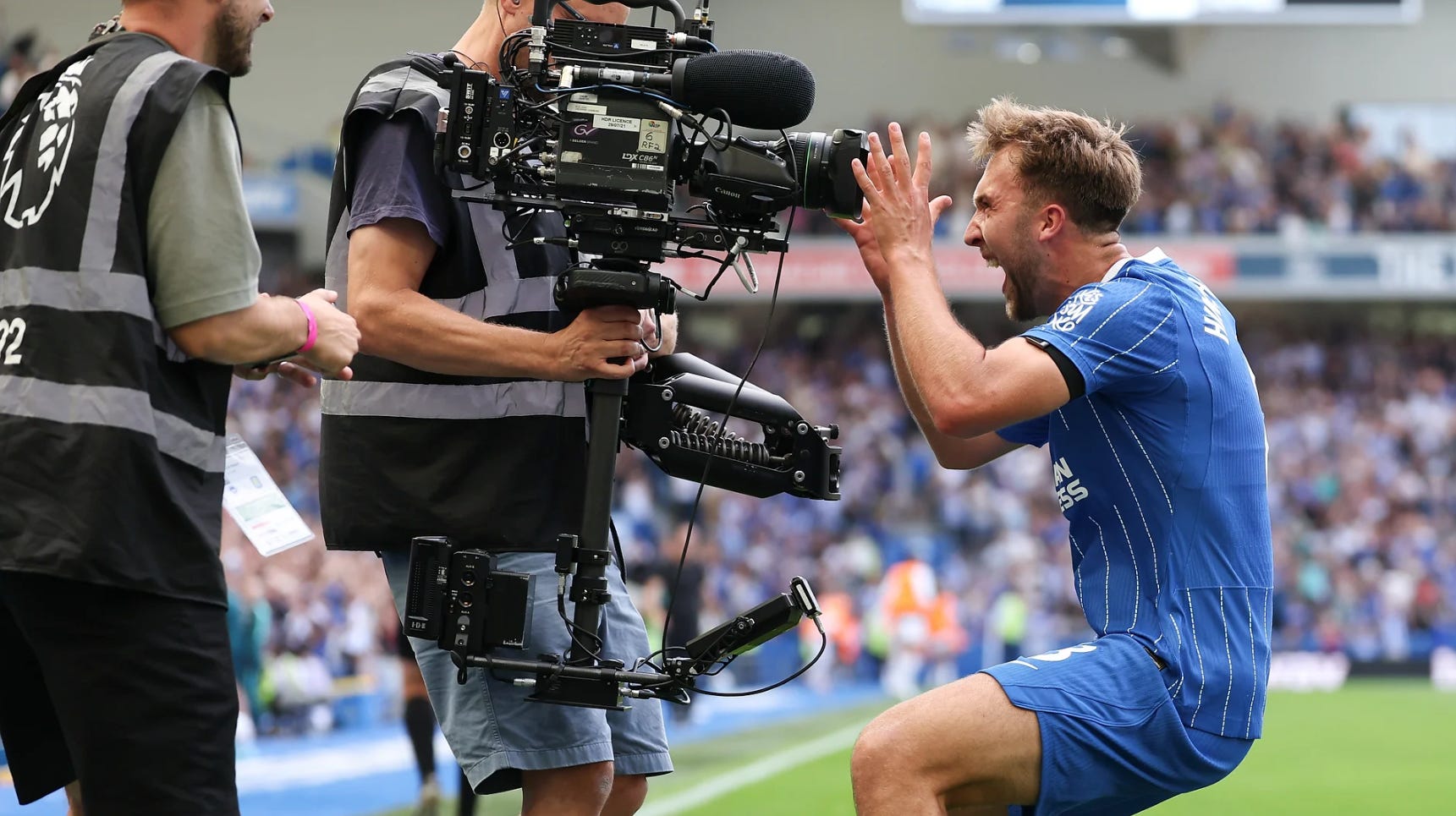
A shortcut would be to just call this guy:

He probably knows best.
🍕 What’s on today’s menu?
All you NEED to know about Brighton: 6 reasons why they crush it
It’s not only Groß and De Cuyper: 3 other Brighton picks I’m eyeing
Do you start Groß and MDC against Liverpool? (in-depth analysis)
Should you start Silva, Thomas or Van Hecke? Another close look at their match-ups
Johan Manzambi vs Manchester City
And MUCH more!
Gameweek 7 review: The first week of my wildcard team
Let’s kick things off with a brief Gameweek 7 review.
I don’t have the same prediction track record as the guy above, but so far this season, the Data Dribble wildcard and free hit teams have been performing well.
Fortunately, my Wildcard 7 didn’t break this run (so far) and got off to a good start:
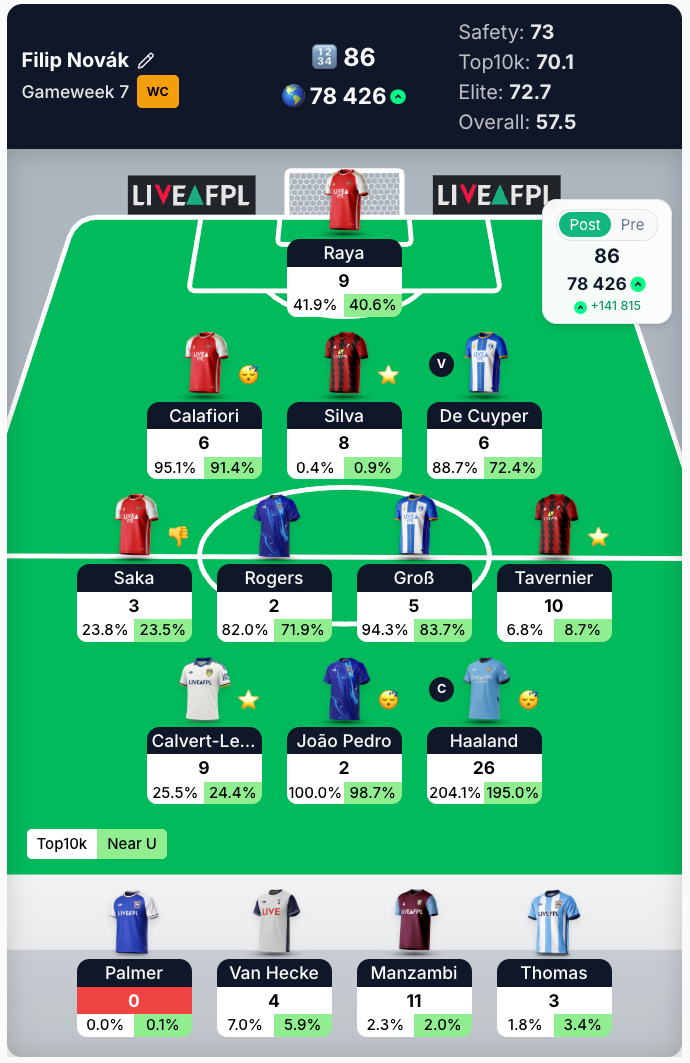
The “1st sub decision” was between Dominic Calvert-Lewin, Jan Paul Van Hecke, and Johan Manzambi, so that benched Manzambi’s 11-pointer didn’t matter much in the end.
Looking at the team and the EOs around my rank, I wonder: didn’t I overdo it with shield picks?
There were quite a few: Erling Haaland, João Pedro, Pascal Groß, Morgan Rogers, Maxim De Cuyper, and Riccardo Calafiori. Raya is close, but his points do move the needle. So, it’s:
55% shields
10% normal pick (0.6 points relative to the field per point scored)
35% differentials
One less player with humongous effective ownership would probably make this a bit more balanced, but I don’t think there’s a universal answer. I entered the season with a straightforward mindset: super-conservative early on, then exploit the upside once I had a large enough sample of data and context.
If you play poker, it’s a bit like playing a deep-stack multi-table tournament. So the Wildcard 7 wasn’t the time to wander too far from the template.
It’s all more adventurous when you factor in the players I benched: Johan Manzambi (£6.0m), Jan Paul van Hecke (£4.9m), and Bobby Thomas (£4.0m) were all under 6% EO. And all of them will come into play eventually.
Manzambi likely won’t sustain similar levels for long, but that yellow flag and Manchester City next could spook some managers for now.
Also, he might not be what we think he is, as we’ve only seen him in 4 Aston Villa games.
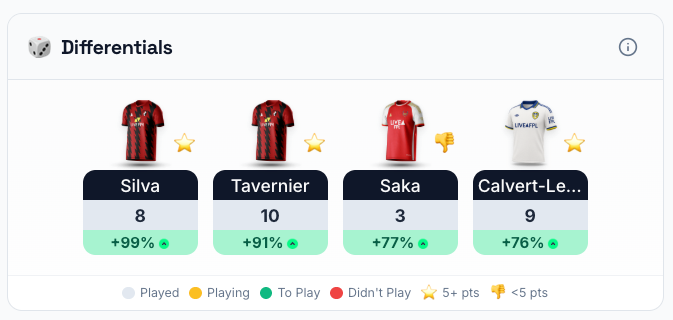
If everything goes to plan, I’d like to enter the Christmas period (Gameweek 12+) with 5 FTs.
However, I now have 3 FTs and £1 million in the bank, so I’ll make some transfers soon-ish.
A large part of the current shopping list is Brighton players.
And Black Friday is coming…
All you NEED to know about Brighton
This season, Brighton:
scored 23 goals from 14.90 expected goals
conceded 5 goals from 10.20 expected goals conceded
scored 8 set piece goals from 4.1 expected set piece goals
And people are vocal about it.
Unsustainable, lucky, regression to the mean, blah blah.
❗ Yeah, I know how football data analytics work, and I know it will eventually happen – it’s inevitable. But you can’t throw out expected numbers without context.
Pardon me, expected data without the context AFTER 7 GAMEWEEKS OF FOOTBALL.
First, while you can do some calculations, it’s hard to say when regression happens or by how much those important numbers will decline. You can, however, identify the levels at which your FPL picks stop being viable.
And that’s not complicated if you know what to look for.

But before we get more granular, what exactly is happening with Brighton?
Their 14.90 xG is the highest, alongside Manchester City.
Their 4.1 set-piece xG is the 3rd highest
123 non-penalty shots fired – only United have fired more
Despite being that trigger-happy, their average shot has 0.125 xG, the fourth highest
They accumulated 16.50 post-shot xG (again, the highest), meaning their players are pretty composed in front of goal
So it’s not a team that ranks poorly in the most important metrics, and when regression happens, it becomes a problem.
No, it’s a team that dominates the Premier League while also running hot. 🔥
There are also several factors that partly explain that overperformance:
1️⃣ Brighton have improved massively in the air this season
If you read my pre-season content, I predicted this just by looking at the players they targeted in the summer transfer window.
As you may know, I spent 8 years advising well-known European football clubs on how to act in the transfer market, so I recognise these patterns.
Brighton now have:
the 3rd most defensive headers in the league
2nd best success rate in offensive aerials
3rd best xG from set pieces
2nd best xG per set-piece shot, and it’s humongous – 0.15
4th most effective corners by xG per corner
the most goals from corners
Set pieces usually involve many headed shots, attempts from crowded areas, and other low-xG shots, so xG overperformance can emerge quickly, especially with small sample sizes.
But their routines clearly work.
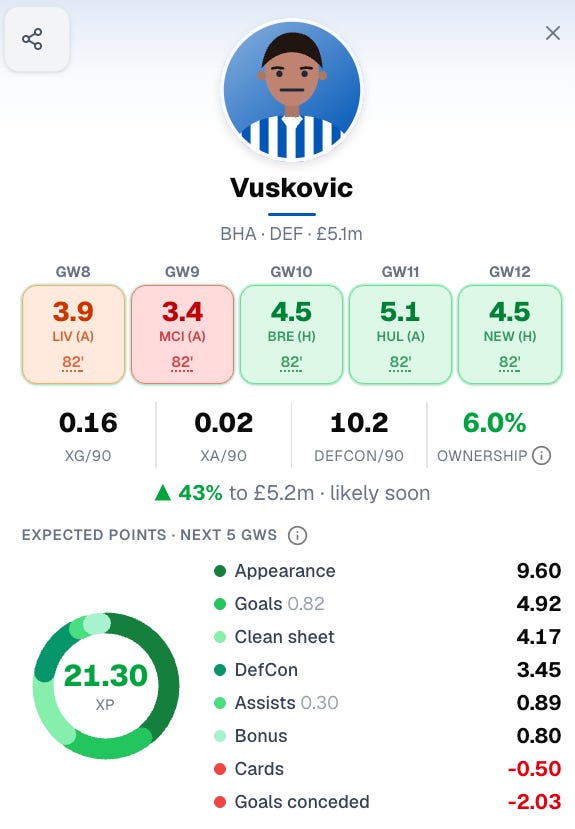
Vuškovič’s player card in FPL Copilot. I suspect he’ll start smiling pretty soon
2️⃣ Bart Verbruggen is amazing
Conceding just 5 goals from 10 expected over 7 GWs is a big discrepancy, and luck and poor finishing are definitely involved.
But the goalkeeper factor plays its role too.
The Dutchman produces amazing shot-stopping numbers against shots inside the box, and while goalkeeping data can be volatile, this isn’t the first time he's done it. It’s his 4th Premier League season, and his numbers have improved in all of them.
Last season, he became elite, and he picked up where he left off.
3️⃣ Their defence is slowly improving
They have conceded just 1.1 xG per game over the last four GWs, with the best xG/shot in the league in that period.
With Verbruggen and your defenders keeping opponents from getting shots close to goal, it’s a killer combination.
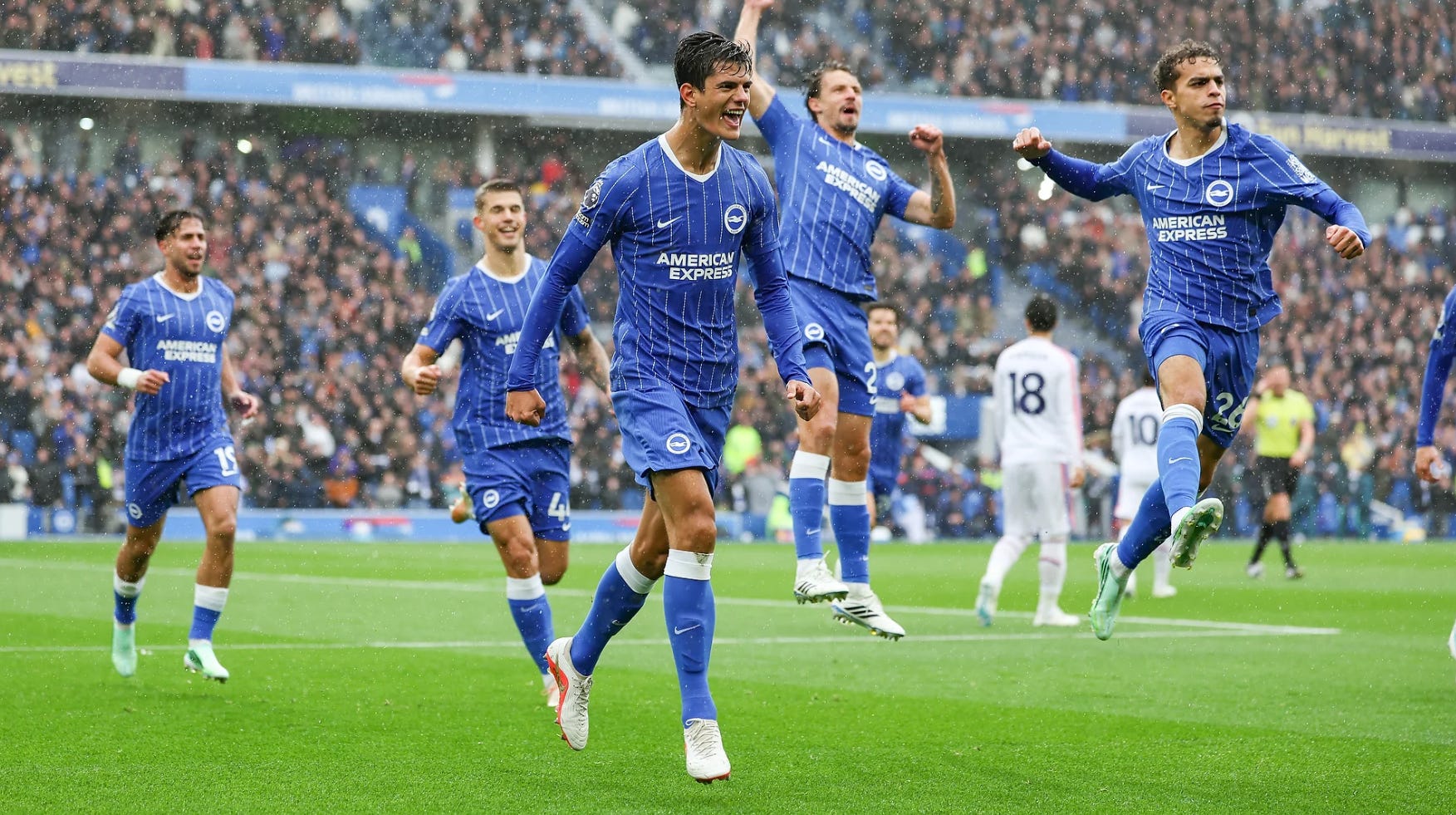
4️⃣ Their rest defence improved a lot
Early in the season, Brighton struggled with fast transitions and when they were pressed high.
This could be highly match-up-dependent, given this tiny sample, but they almost don’t concede shots from those situations lately.
5️⃣ Their pressing works
And it’s intense.
Their counter-pressing works.
And it’s intense.
They dominate every pressing metric you can think of. Their well-functioning press creates shots while preventing opponents from creating good ones (at the moment).
And unless Premier League managers find a solution, it will have a major impact on results.
6️⃣ They are not one-dimensional in the final third
I discussed aerials.
But they create plenty of great chances against settled blocks through fast transitions, pressing, and set pieces.
They don’t just whip crosses into the box. They play smart passes into it. They can distribute inside it. They can play creative passes from half-spaces and zone 14. There’s variety.
And it’s hard to defend it.
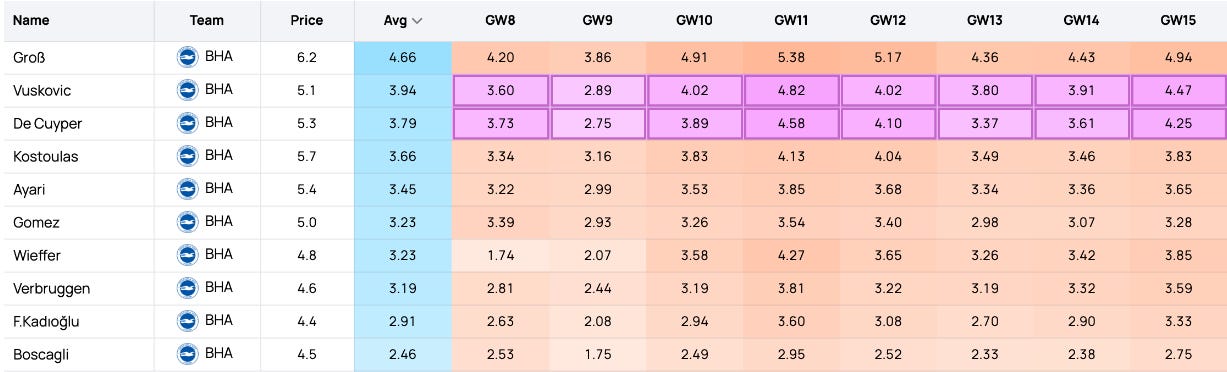
I could go deeper, but this should give you a good sense of what’s happening right now.
So, which Brighton players am I eyeing from about 10 viable picks?
Because at some point, I’ll own a triple-up and I won’t think twice about it.
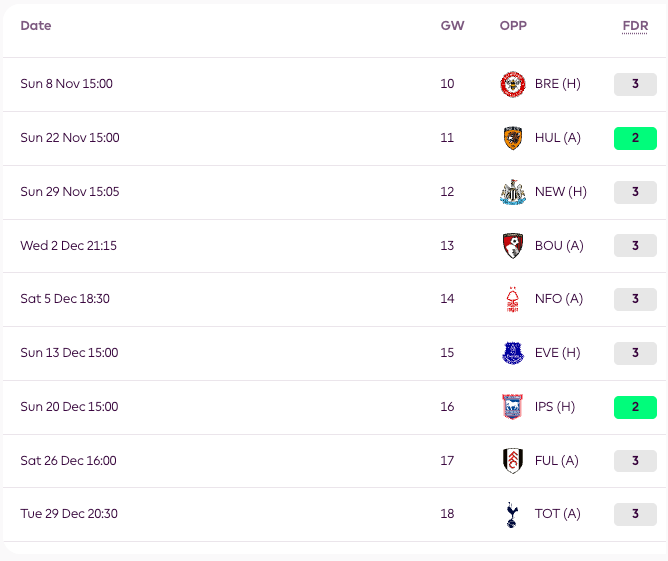
Just look at those post-Gameweek 9 fixtures: