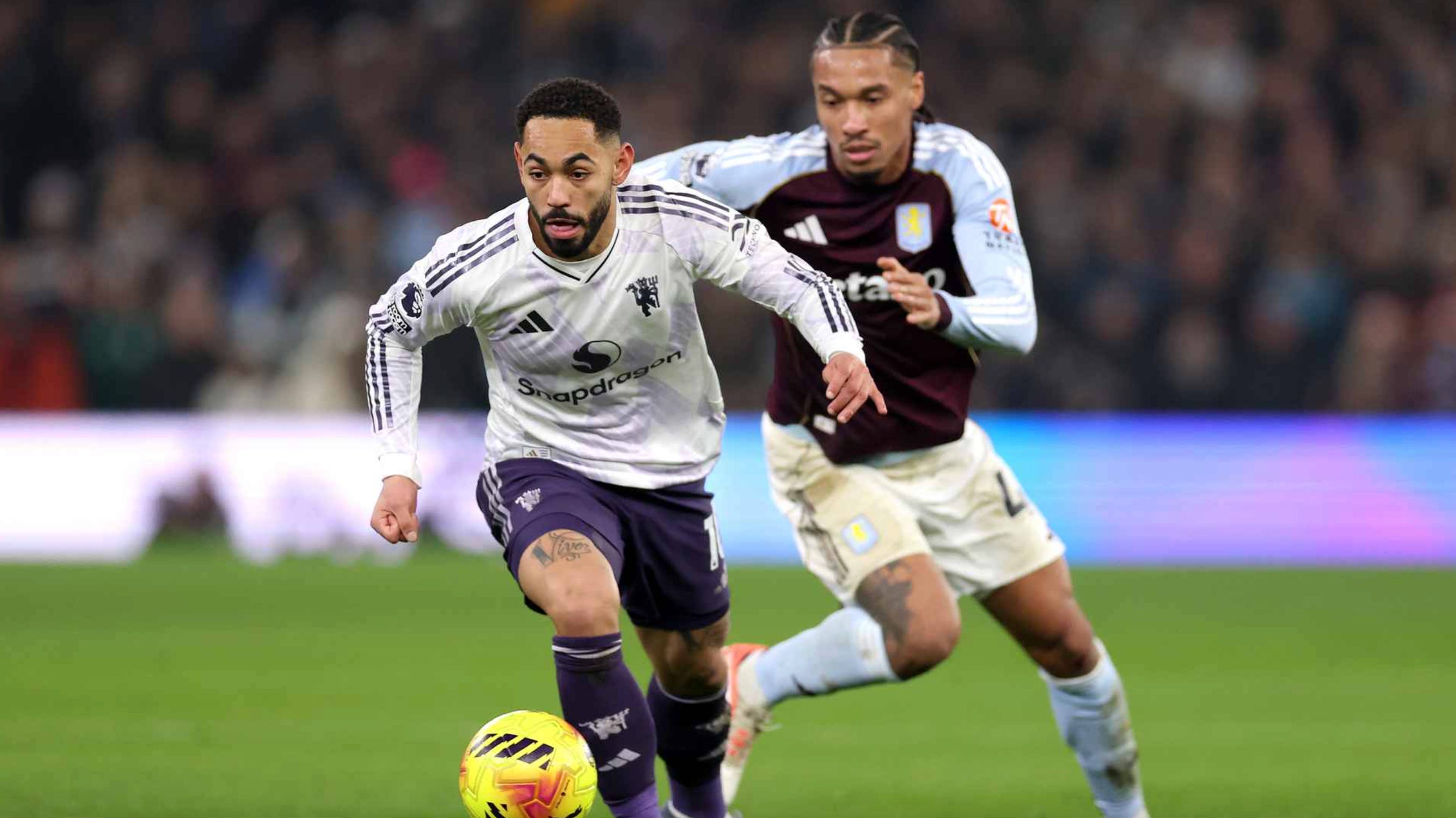

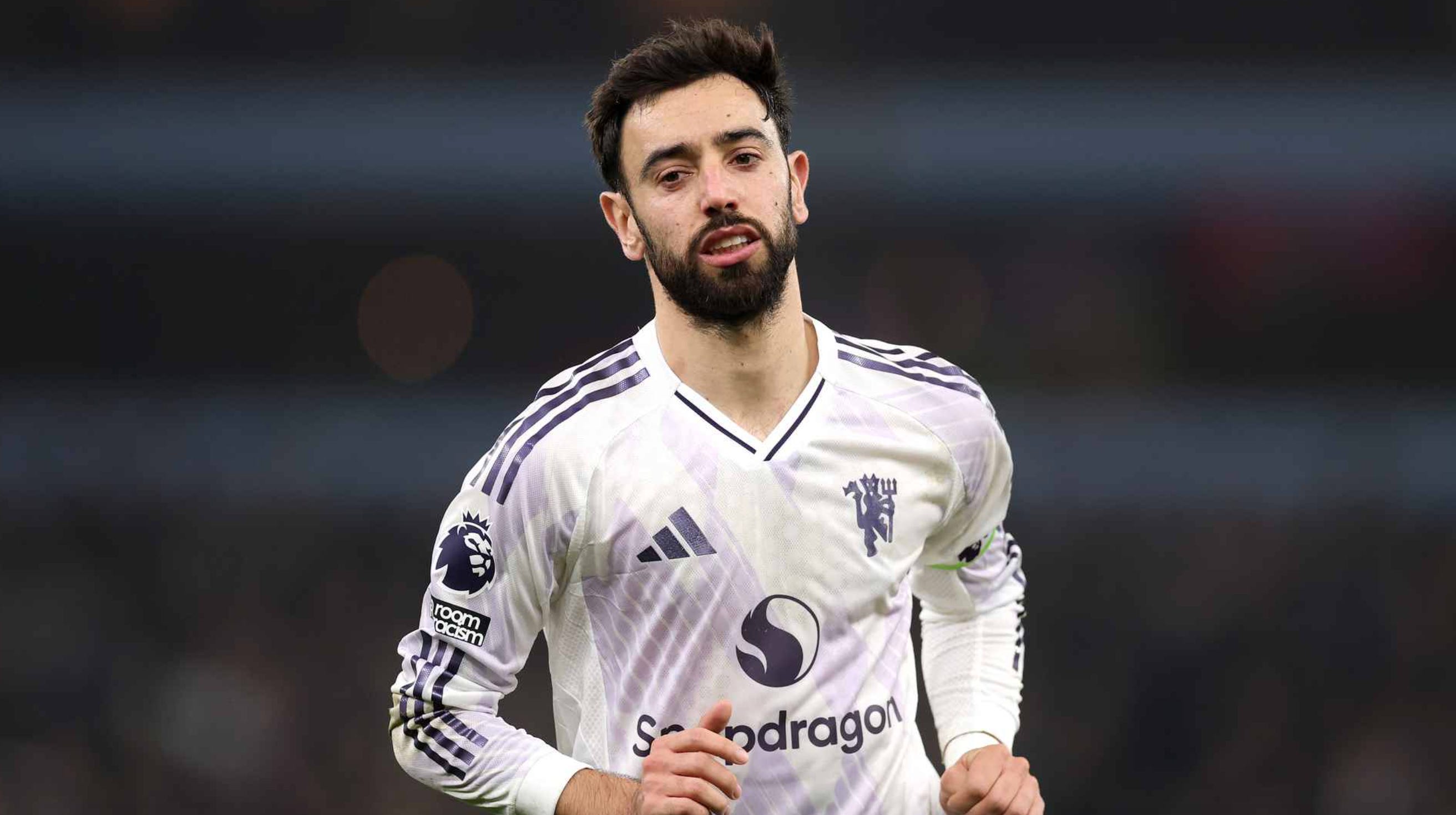
And they say Christmas is a peaceful season…
I’m sure some of you are in a bit of an existential crisis caused by Bruno Fernandes and KDH’s injuries, puzzled by Igor Thiago’s lack of shots, and wondering which attacking players are supposed to earn us points in future.
It also sounds a hell of a lot like me.
So, we will zoom out and carefully assess all viable options, potential caveats, and where we could gain an edge.
Although I certainly like a good intro in my articles, what do we say to it this time?
Let’s dive straight in:
United will be a different team: Does the Bruno → Cunha transfer make sense?
When you browse through the list of United’s absentees, it doesn’t look good:
Bruno Fernandes
Bryan Mbeumo
Amad Diallo
Kobbie Mainoo
Harry Maguire
Matthijs de Ligt
Noussair Mazraoui
The Magnificent Seven.
Same as in the movie: one mission, seven very different profiles and roles within that United team.
For our article, Fernandes, Mbeumo, and Diallo are of most interest to us, as they share an essential quality (though each in a slightly different way): ball progression.
In other words, carrying and passing the ball into dangerous areas. We can explain it from both a broader footballing perspective and with data, but whatever we use, we get the same result. Data is not some fugazi scheme. It describes what actually happens on the pitch.
When someone says Bruno Fernandes, you instantly imagine creative passing and vision for the final pass, not acceleration, long-distance running, or the ability to take on opponents 1-v-1.
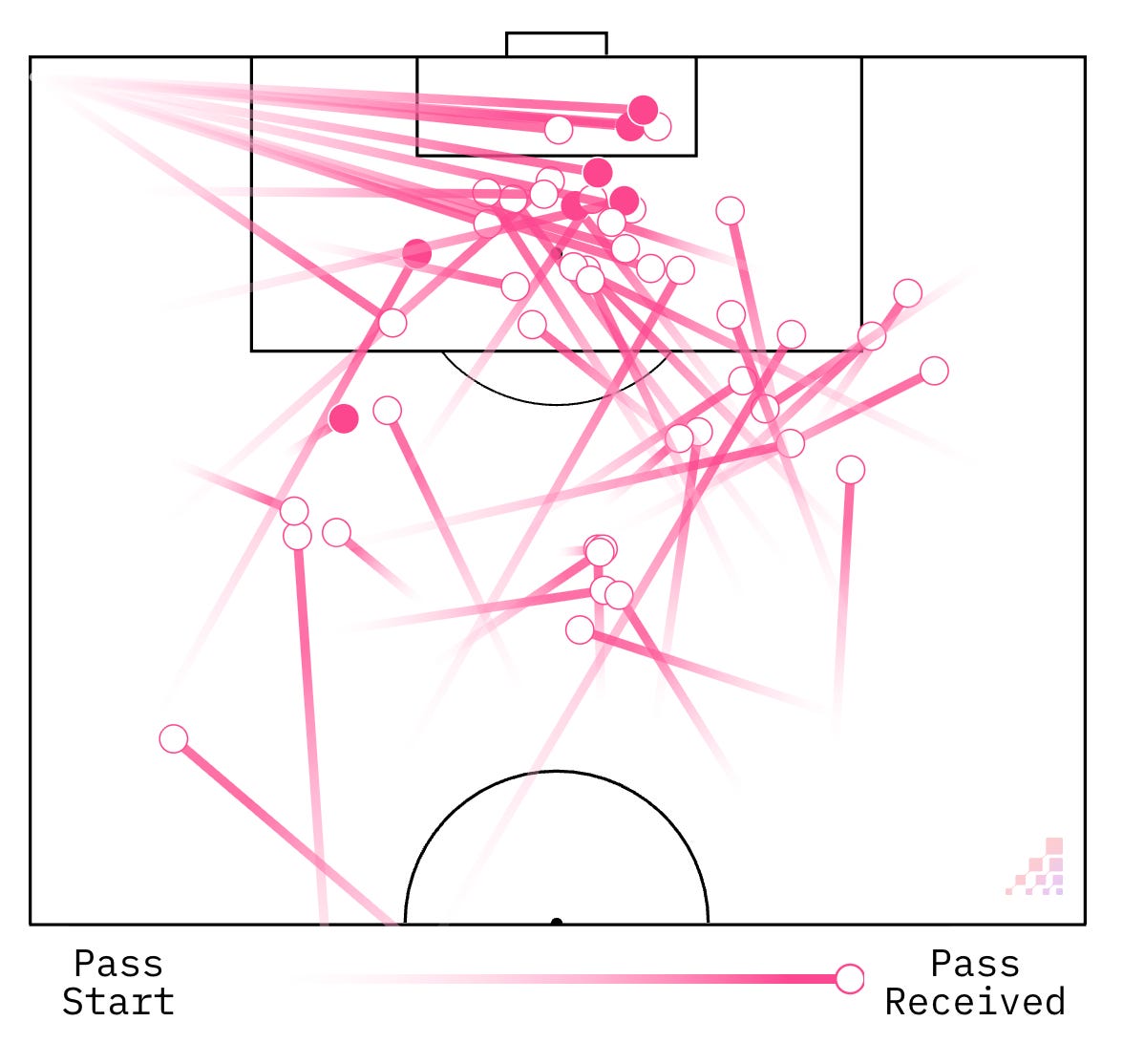
The Portuguese ranks in the 95th percentile for passes into the penalty area per 90 minutes, contributing from both open play and set pieces.
He is also in the 99th percentile for the number of passes leading directly to a shot per 90 minutes (55% of these come from open play). StatsBomb numbers via FantasyFootballScout show that only a handful of other players with a 600+ minute sample have a higher xA p90 — Rayan Cherki, Jérémy Doku, Bukayo Saka, and Alejandro Garnacho. All are on 0.25+ p90.
Of course, his flawless execution of chipped balls into the box and zone 14, together with throughballs from deep and both half-spaces, also show up in the advanced goal probability added (GPA) models, which measure how his touches with the ball increase the likelihood of his team scoring (and not conceding, at the same time).
While Bryan Mbeumo is undoubtedly a good ball carrier, that’s not his primary role in that Bruno-centred team. He gets the shit done in and around the box — a constant goal threat, vertical passes from the right half-space, open-play crosses, and a fair share of set pieces.
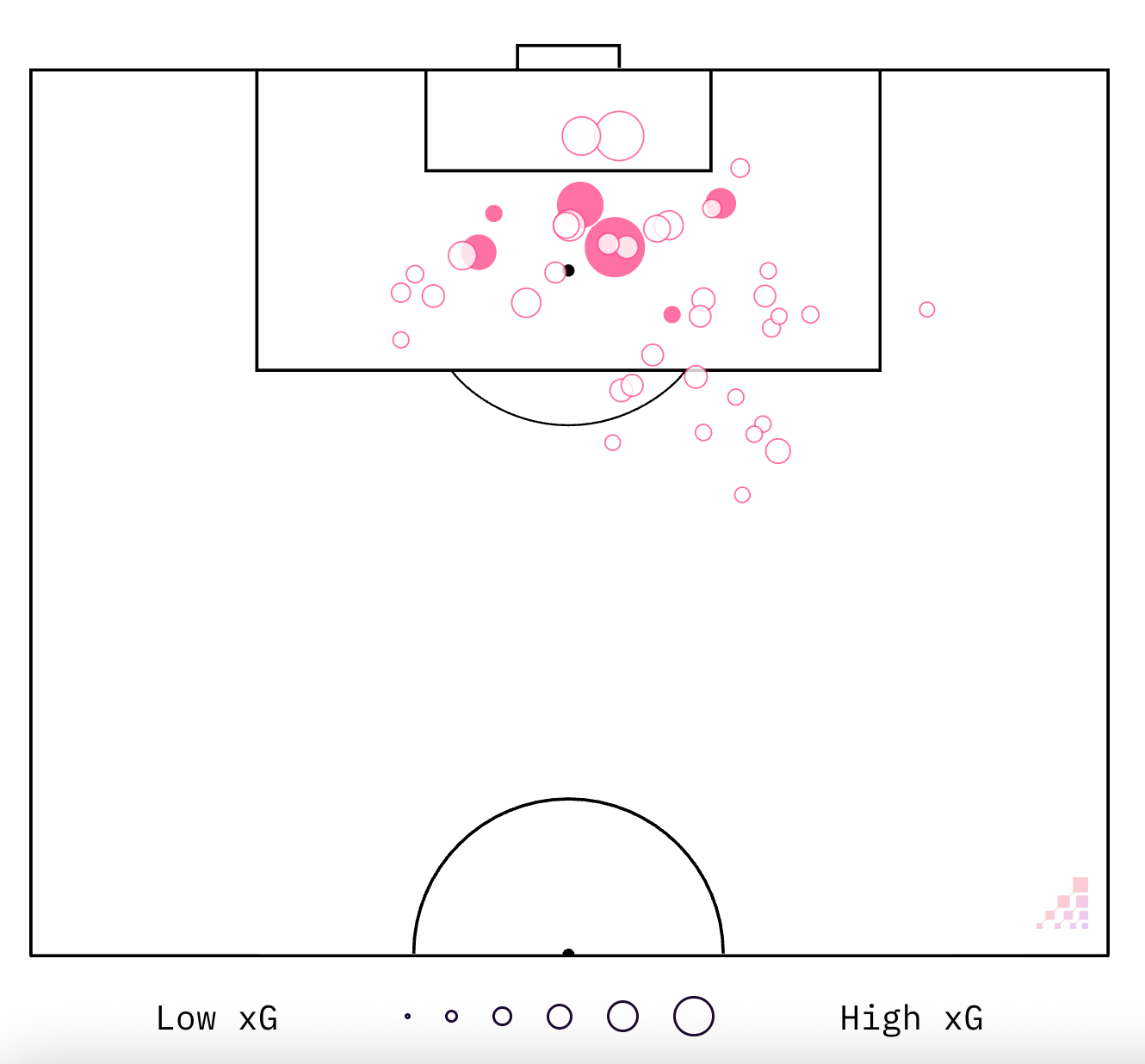
Amad is, again, something a little different.
The boy can run AND pass. When he plays as a wing-back, there is only one or two other fullbacks in the Premier League who make more progressive runs per game. His great awareness creates a constant threat — he often carries the ball into the box or cutback areas and then distributes from there.
He’s also a good crosser.
If you’re a United fan, you’ll definitely recall several of those trademark sharp crosses from the bottom edge of the penalty area into the 6-yard box or cutback area on the far post.
We’ll get to talk about Cunha in a moment, but it’s not difficult to see why United are ranked 2nd for non-penalty xG over the last seventeen Gameweeks. They will be a worse team in the final third. It’s impossible for them not to be.
At the same time, there are Wolves, Leeds, and Burnley games on the horizon, so we need to adjust for fixture difficulty here.
It’s challenging to predict exactly Cunha’s output in those games. It won’t be driven by service and the sustained threat his team creates, but rather by the volume of his own actions and by moments of individual brilliance, which are a bit more variance-based. I can imagine his usage will be to carry the team on his back, basically. The question is whether he can create enough volume to be a threat.
One part of that is the quality of the opponents, and we already covered that.
Then there’s him as a player.
Does his final product depend on the quality of service, or can he generate the threat himself?